

Today’s article takes a closer look at a very specific challenge in UX design: choosing the primary languages for a digital product and defining how the interface should behave when users switch between them.
It may sound like a relatively straightforward issue, but as you’ll discover, it’s much more complex than it first appears.
This challenge applies to websites, applications, and complex digital systems alike, regardless of the languages involved. It plays a critical role in creating a good User Experience (UX), while also raising important questions about content management and maintenance. In many cases, supporting additional languages means maintaining separate versions of the same content.
This article, along with the research behind it, emerged from our work on the website of the Faculty of Data and Decision Sciences at the Technion – Israel Institute of Technology. We’ll share the challenges we encountered, the solutions we explored, and how we approached the project within its constraints.
A Little Background on the Project and the Bigger Picture
The project to redesign the website of the Faculty of Data and Decision Sciences at the Technion began at our studio in August 2023 and continued through January 2024.
It was a comprehensive project involving several stages, including user research, UX planning, and UI design.
The objective was to redesign the existing website, adapt it to the needs of its diverse audiences, and introduce a new visual language.
The process included extensive preliminary research across different areas, UX design for most of the website’s screens, ongoing collaboration with the faculty team to gather feedback and implement changes, and the development of a new visual design language.
While working on the website’s navigation menus, an important question came up: Which languages should the website support, and what should happen when users switch between them?
Because the faculty serves a diverse audience, the website needed to support at least two languages: Hebrew and English. The faculty also wanted Arabic to have a presence on the website.
To explore the available options, we conducted a competitive analysis of websites serving multilingual audiences. We examined other faculties at the Technion, additional universities, and organizations outside the academic world, including municipal websites.
Our goal was to understand how websites serving diverse, multilingual audiences handle language selection and switching.
We analyzed existing solutions, evaluated their advantages and disadvantages, and considered which approach, or combination of approaches, would best fit the website we were designing.
Based on our findings and the constraints defined by the faculty, we created a list of possible solutions and prioritized them.
It’s important to remember that every solution comes with trade-offs. The challenge is to identify the approach that best serves the specific product and its target audience.
In our case, we decided to find a middle ground between delivering a complete, high-quality user experience and keeping the faculty’s ongoing maintenance requirements manageable.
Later in the article, we’ll explore the different approaches we considered and explain why some of them were ruled out.
But first, let’s look at why multilingual support matters in the first place.
Why Would We Want Our System to Support Multiple Languages?
The most basic answer is accessibility.
It may sound obvious, but it’s an important question to ask.
Ultimately, depending on our target audience, we want to make our system accessible to as many users as possible.
To do that, we need to provide the most fundamental requirement of a good user experience: the ability to understand the interface and interact with it.
Users who cannot read the language of a system won’t be able to consume its content or perform actions within it. In effect, this prevents them from using the system in the first place.
Imagine trying to find your way through a remote village in China, where every sign is written in Chinese, and you have no way to translate anything because your phone has just died.
Wouldn’t you find that frustrating?
Would you avoid traveling to similar places in the future? Or would you at least make sure your phone was charged and connected to the internet so you could use Google Translate? Maybe you’d even carry a dictionary.
Now think about the same situation from the user’s perspective. Would users return to a digital system that operates in a language they cannot understand?
If it’s a commercial product with competing alternatives, probably not.
If it’s a government service that users have no choice but to use, they’ll likely stay and do whatever is necessary to complete their task, but with considerable frustration and plenty of mistakes along the way.

Beyond Accessibility: The Benefits of Multilingual Support
While accessibility is the most obvious reason to support multiple languages, it is far from the only one.
Reaching New Target Audiences
One of the major advantages of multilingual support is the opportunity to reach new audiences.
If you’re entering a new market, adapting your product’s interface to the local language can help users feel that the product was designed with them in mind.
It communicates that their needs have been considered and that the platform is intended for them.
This can encourage adoption among new audiences, particularly when operating in global markets.
Increasing User Engagement and Satisfaction
Users often feel more comfortable interacting with products that communicate in their native language.
Providing content in a familiar language can improve engagement, create a stronger sense of connection, and contribute to greater user satisfaction.
Ultimately, a more comfortable experience may also encourage users to return to the platform.
Meeting Local Regulatory Requirements
In many countries, legal requirements specify that certain digital content must be available in the local language.
Complying with these regulations is important not only from a legal perspective but also for building trust with users.
Improving Communication
Language is one of the most important tools for effective communication.
Providing information in multiple languages helps users understand instructions, guidelines, and other essential content, reducing the likelihood of misunderstandings.
Strengthening Brand Perception and Cultural Sensitivity
A multilingual platform demonstrates awareness of cultural diversity and different user needs.
It shows that the product recognizes and respects the preferences of people from different linguistic and cultural backgrounds.
Creating a Competitive Advantage
When choosing between similar products, users may prefer the one that supports their language.
Providing multilingual support can therefore offer a competitive advantage, particularly in markets with diverse audiences.
Improving SEO
Multilingual support can also contribute to Search Engine Optimization (SEO).
When content is properly localized and indexed, it can appear in search results for users searching in different languages, increasing the website’s potential reach.
The Main Challenge: Ongoing Maintenance
Supporting multiple languages offers many advantages, but it also introduces challenges.
The main one is ongoing maintenance.
Maintaining a website means having people responsible for updating and publishing content as needed.
The more work there is, the more resources are required. In most cases, supporting additional languages significantly increases that workload.
Later in the article, we’ll discuss the different approaches to creating a multilingual website. What many of these approaches have in common is the need to create a separate translation for each piece of text.
Take publishing an article like this one, for example.
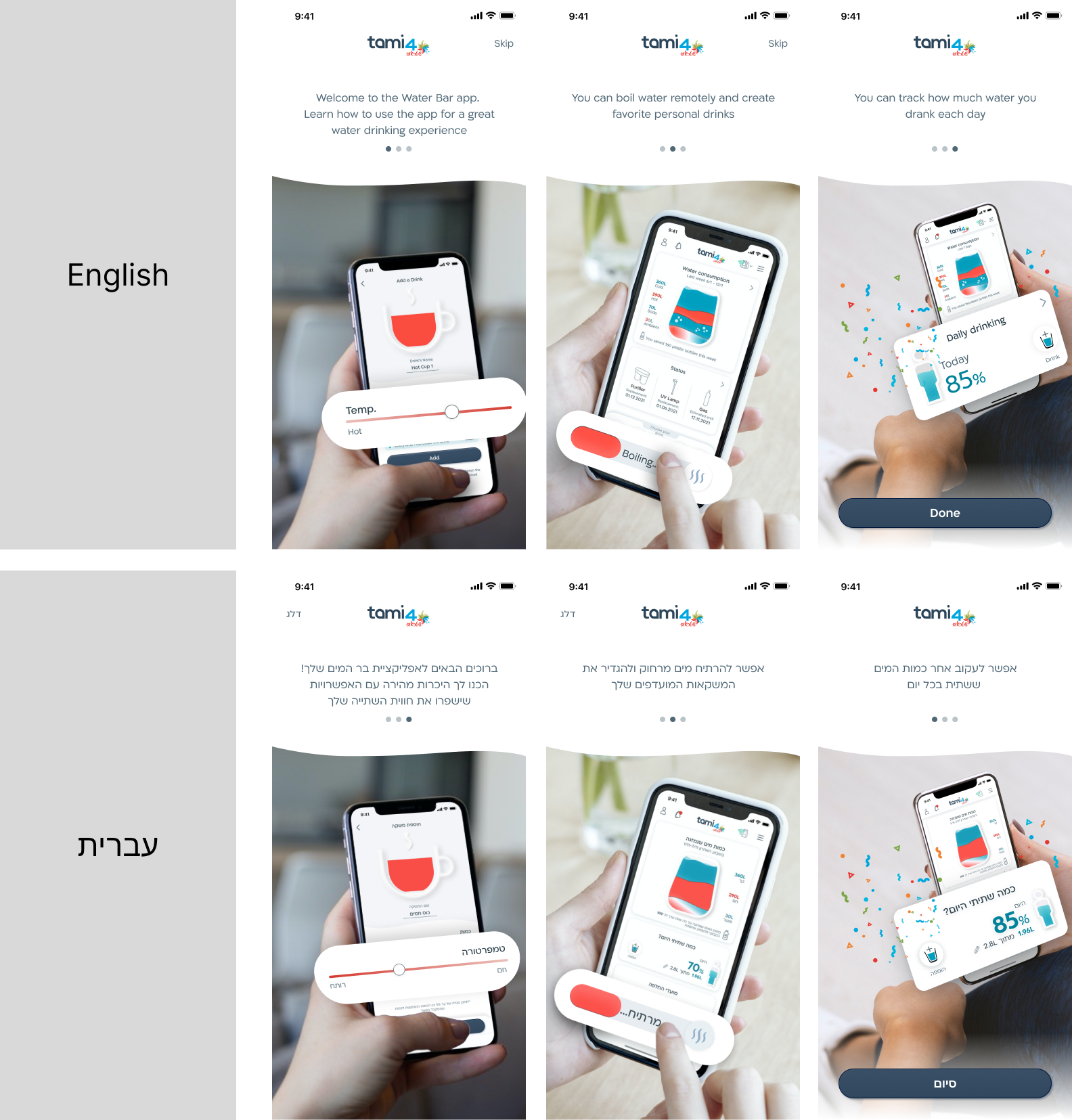
Our studio’s website operates in Hebrew and English. We recently added English to make our content available to a wider audience.
This means that, for readers to access the same content in both languages, we need to prepare the article in Hebrew and English.
Today, tools such as Google Translate and ChatGPT can help with translation.
However, the translated text still needs to be carefully reviewed and edited. These tools don’t always produce accurate translations. They may miss the context of a sentence or use terminology that isn’t quite right.
This applies not only to new content but also to maintaining existing content.
For example, if we change the terminology used for a particular field in one language, we need to check whether the corresponding term in the other language should also change.
The process becomes even more time-consuming and complicated when more than two languages are involved.
We need to make sure that all language versions follow the same UX terminology and design logic, while also checking that the terminology used in one language doesn’t conflict with other terms in that same language.
In other words, we need to maintain the distinctions between different fields, actions, and concepts across all languages.
So, What Are Our Options When Building a Multilingual Platform?
To keep things simple, we’ll use websites as our examples, although the same principles apply to mobile applications and complex digital systems.
We’ll first look at the behind-the-scenes approaches to building and maintaining multilingual websites, and then explain how each approach affects the user experience.
1. Separate Websites
One way to manage content in two different languages is to create two separate websites. Each website has its own URL, meaning they operate as independent websites. To publish content in both languages, the content must be uploaded separately through two different content management systems.
The websites can contain equivalent content in both languages, or they can offer different content tailored to the needs of each target audience.
For example, on the website of the Faculty of Data and Decision Sciences at the Technion, we want to provide content in Hebrew, English, and Arabic, but to varying degrees.
Since most lectures at the university are conducted in Hebrew, we’d want to offer most of the content in Hebrew, making it the website’s primary language. At the same time, we’d also want to provide content in English.
Since none of the university’s lectures are conducted in Arabic, we assumed that most Arabic-speaking students speak at least one of the other two languages (Hebrew and/or English) and would therefore be able to navigate a website that isn’t in Arabic.
Based on this assumption, we’d want to make relevant information about degree programs available in Arabic for prospective students, while providing less extensive information for current students.
Of course, in an ideal world, we’d maintain the entire website in all three languages. But in reality, there are almost always budget and time constraints, so we need to carefully select which content should be available in each language.
This approach can be more or less transparent to users, and there are several ways to implement it. When users click the language selector, we can either take them to the same page they’re currently viewing, but in the selected language, or redirect them to the homepage in that language.
We would always recommend the first option.
The reason is simple: we want users to remain in their current context rather than forcing them to navigate through the website all over again.
However, this approach introduces another maintenance challenge. To make it work, the website administrator needs to manually link the URLs of corresponding pages in the different languages, increasing the ongoing workload.
When a particular page isn’t available in every language, there are several possible solutions. One is to change only the page layout and navigation menus to the selected language, while keeping the main content in its original language. Another is not to display language options for which no translated version exists.
For example, if a page is only available in Hebrew, there’s no need to display the option to switch to English or Arabic at the top of that page.
Another possibility is to redirect users to the homepage in their selected language, although this is the less recommended approach.
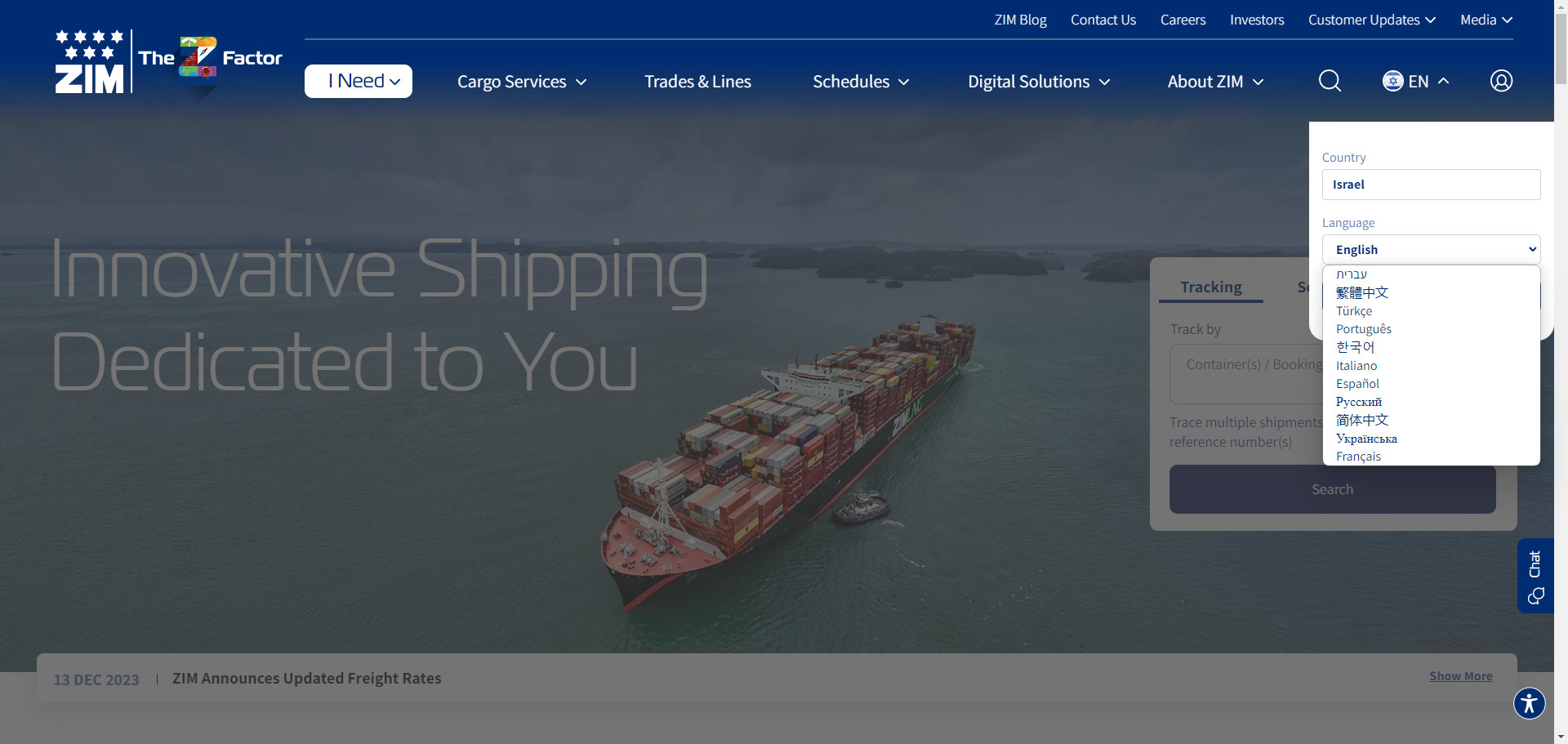
As part of a joint research project with ZIM, one of the world’s leading shipping companies, we also explored the challenge of supporting multiple languages. ZIM’s website supports 12 languages across different countries, and the platform needed to accommodate all of them.
2. A Single Website with Language Options for Individual Pages
In this approach, we build a single website with one primary language and decide individually which pages should be translated into additional languages.
From a maintenance perspective, this allows the people updating the website to work within the same content management environment they’re already familiar with.
The system uses components that can distinguish between pages in different languages, making content management easier in this respect.
However, this approach can also lead to problems and confusion within the system.
Human errors and technical bugs may cause inconsistencies and, in some cases, negatively affect the website’s content.
From the user’s perspective, the same language-switching options described earlier are available.
We can redirect users to the homepage, take them to the corresponding page in the selected language, or use another approach.
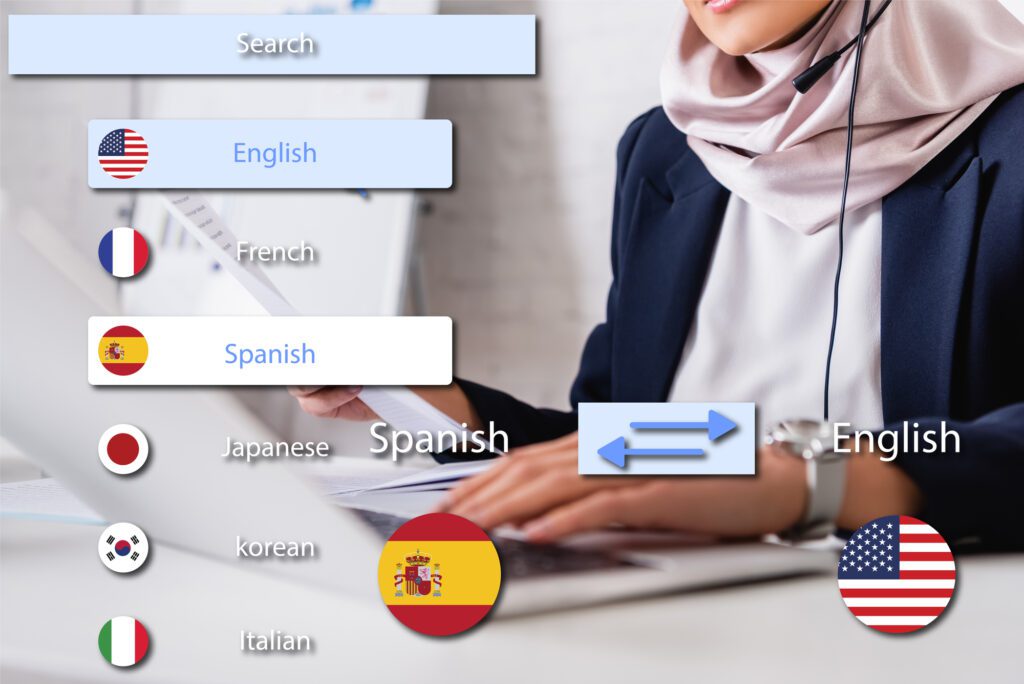
3. A Single-Language Website Using Google Translate
Another useful option is Google Translate, which can be integrated into a website relatively easily.
It allows content to be translated into a wide range of languages, covering most of the languages a website is likely to need.
This approach has several advantages.
It enables translation into multiple languages without requiring extensive manual work, and it can provide users with a relatively seamless experience when switching between languages.
However, it also comes with two significant disadvantages.
The first is cost.
Google’s translation services involve costs that may change over time, with pricing generally based on the number of characters translated.
For websites with high traffic, these costs can become substantial.
The second is translation quality.
As we discussed earlier, Google Translate doesn’t always produce accurate or natural translations.
Therefore, this solution is most suitable when there are no particular sensitivities regarding the quality of translation between languages.
For example, using a tool like this on a website such as AliExpress may be reasonable.
AliExpress serves customers from a huge number of countries and language groups, and its target audience isn’t necessarily looking for a premium or luxury experience.
However, the same approach might be problematic for a brand like Apple, where a sense of premium quality is a central part of the brand’s identity.
It’s difficult to communicate a premium experience when a website contains spelling mistakes or sentences that are difficult to understand.
So, What Did We Choose for the Faculty Project?
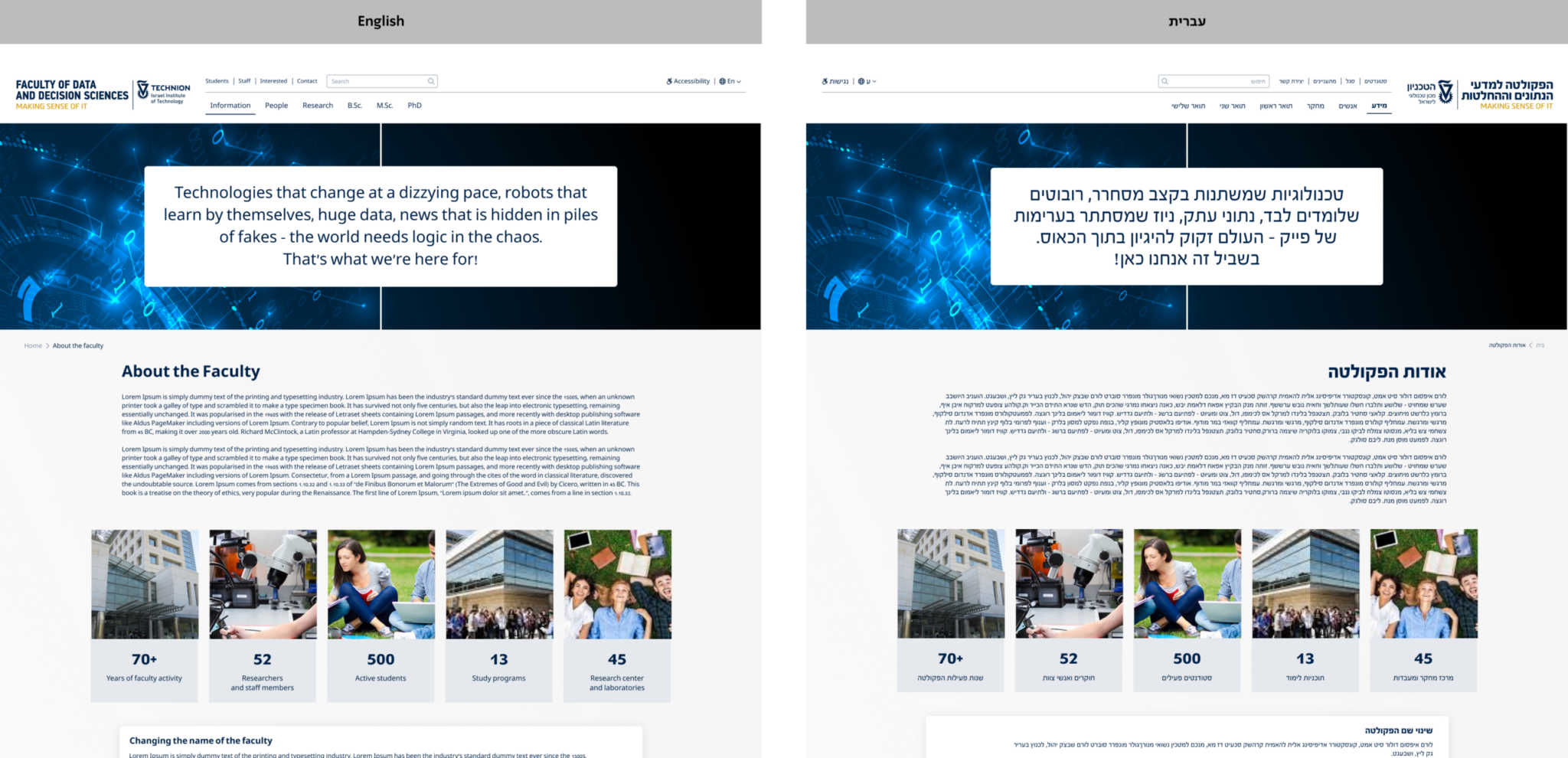
Because of the strict constraints we were working with, we decided to build a single website supporting all three languages.
Hebrew serves as the primary language for most pages, with some exceptions, such as faculty events, which mainly include professional seminars.
When users switch languages, they remain in the same context.
The system takes them to the corresponding page in the selected language.
If no corresponding page exists, only the page layout and navigation change to the selected language, while the content remains in its original language.
This way, we don’t take users out of context or lead them to a dead end when navigating between pages.
Instead, we allow them to access the content in one way or another.
Of course, this is far from an ideal solution.
But there’s the ideal scenario, and then there’s reality.
Sometimes, we need to dream big and implement something a little smaller.
The issue of language support is fascinating, and there’s always more to explore and research.
At the end of the day, good UX design often comes down to paying attention to the smallest details and creating an experience that feels as smooth and intuitive as possible for users.
If sharing our research and learning process has given you something useful to think about, then we’ve achieved our goal.
Ultimately, we should all strive to make people’s lives in the digital world easier, saving them time and effort.
And just to make things clear: this article is available in both Hebrew and English on our website, so you can read it in whichever language you prefer.
Want to Learn More About Our Website UX/UI Design Services?
Explore our UX/UI design process.
Interested in Our English-Language Review Services?
Learn more about our English-language testing and review services.